

Stellest Lenses vs. Standard Glasses: Slowing Myopia Progression in Redlands Schoolchildren
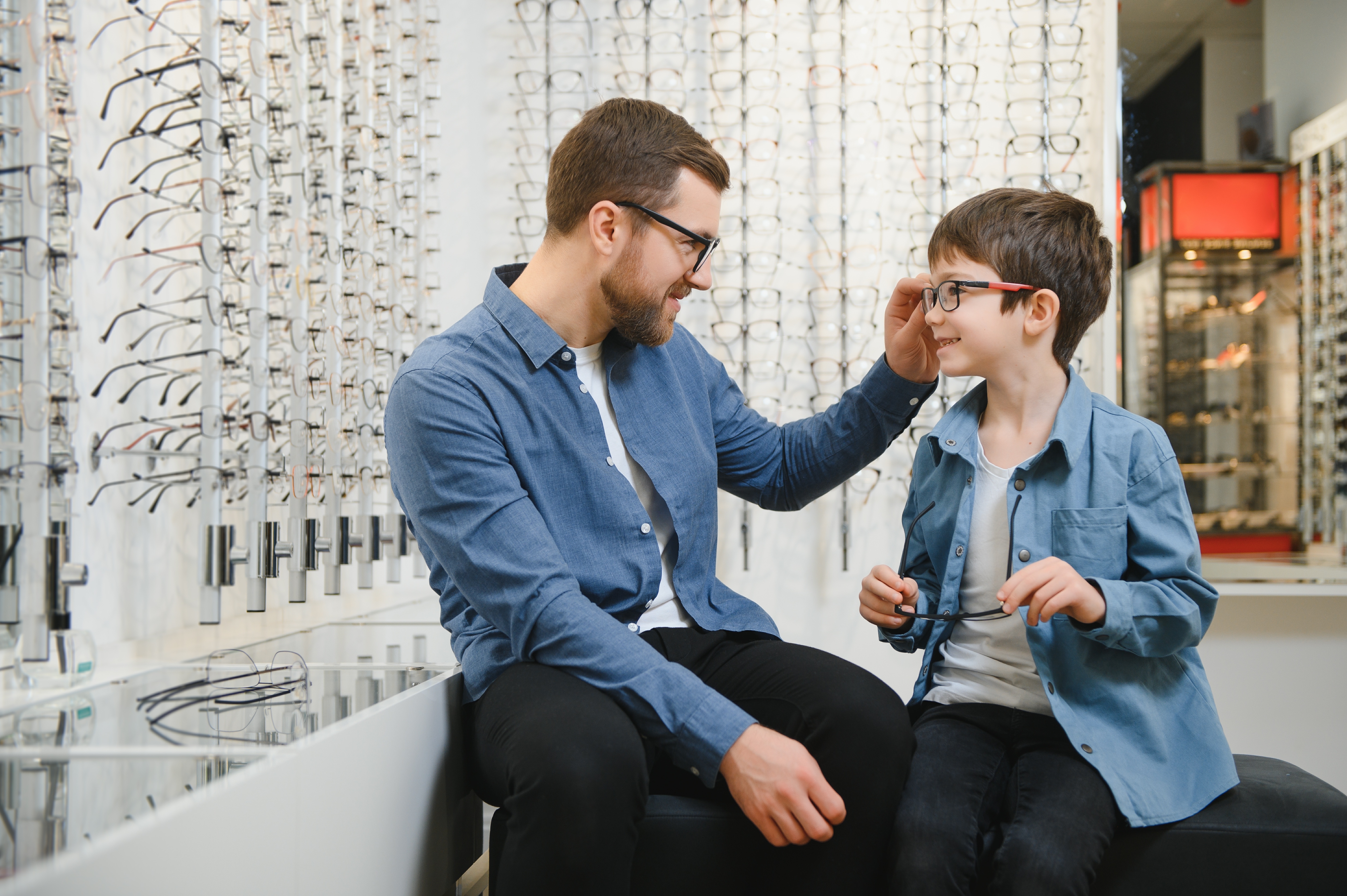
When your child's glasses prescription keeps getting stronger, it may be more than a routine vision change. Myopia, or nearsightedness, often progresses throughout childhood, making it increasingly difficult to see distant objects clearly. Stellest lenses offer a different approach to managing myopia by helping slow its progression rather than simply correcting blurry vision.
Why Standard Glasses Are Not Enough for Myopia Control
Traditional single-vision glasses correct nearsightedness by focusing light properly onto the retina. They help children see the classroom board, read distant signs, and participate in everyday activities without blurry vision.
However, standard glasses do not significantly slow the eye's excessive growth associated with myopia progression. As children grow, their prescriptions may continue to increase, requiring stronger lenses over time.
At Orange Plaza Optometry, we emphasize early myopia management because higher levels of nearsightedness are associated with an increased risk of retinal detachment, glaucoma, and other eye conditions later in life.
How Stellest Lenses Help Slow Myopia Progression
Essilor Stellest lenses are specially designed eyeglass lenses that provide clear vision while helping slow myopia progression in children.
Unlike traditional glasses, Stellest lenses use Highly Aspherical Lenslet Target (H.A.L.T.) technology. This design combines a clear central viewing zone with surrounding rings of tiny lenslets that create a special optical signal to help reduce excessive eye elongation.
Clinical research has shown that Stellest lenses slowed myopia progression by an average of 71% over two years compared to standard single-vision lenses. While individual results vary, this technology offers an evidence-based option for managing childhood nearsightedness.
Stellest Lenses vs. Standard Glasses: Key Differences
Both options correct blurry distance vision, but their long-term benefits differ.
• Vision Correction: Both Stellest lenses and standard glasses help children see distant objects clearly.
• Myopia Progression: Standard glasses primarily correct vision, while Stellest lenses are designed to slow worsening nearsightedness.
• Lens Technology: Traditional glasses use conventional optical correction, while Stellest lenses incorporate specialized lenslets to help manage eye growth.
• Daily Wear: Both options are worn like regular eyeglasses, making Stellest lenses convenient for school-aged children.
• Long-Term Management: Stellest lenses are part of a myopia management strategy that includes regular eye exams and prescription monitoring.
Which Children May Benefit From Stellest Lenses?
Stellest lenses are FDA-authorized for children ages 6 to 12 when starting treatment, provided they meet the appropriate prescription and eye health criteria. They may be particularly beneficial for schoolchildren whose nearsightedness continues to worsen or who are not ready for myopia management contact lenses. During a pediatric eye exam, we evaluate your child's prescription, eye health, and myopia progression to determine whether Stellest lenses are an appropriate option.
Why Early Myopia Management Matters
Myopia often progresses most rapidly during childhood, making early intervention especially important. Waiting until a child's prescription becomes significantly stronger may mean missing an opportunity to manage its progression sooner. Regular follow-up visits allow us to monitor prescription changes, evaluate treatment effectiveness, and adjust your child's myopia management plan as needed.
If your child's glasses prescription keeps changing, schedule a pediatric eye exam with Orange Plaza Optometry to explore whether Stellest lenses can help slow myopia progression. Contact our office in Redlands, CA, by calling (909) 335-0300 to book an appointment today.


Contact Info
Office Address: 458 Orange Street
Redlands, CA 92374
Call Or Text (909) 335-0300
Office Hours
- Monday 9:00am - 5:00pm
- Tuesday 9:00am - 4:00pm
- Wednesday 9:00am - 5:00pm
- Thursday 9:00am - 5:00pm
- Friday 9:00am - 4:00pm
- Saturday Closed
- Sunday Closed
© 2026 Orange Plaza Optometry. All rights Reserved. Accessibility Statement - Privacy Policy - Terms and Conditions - Sitemap
Powered by:
